
27
From the Greek
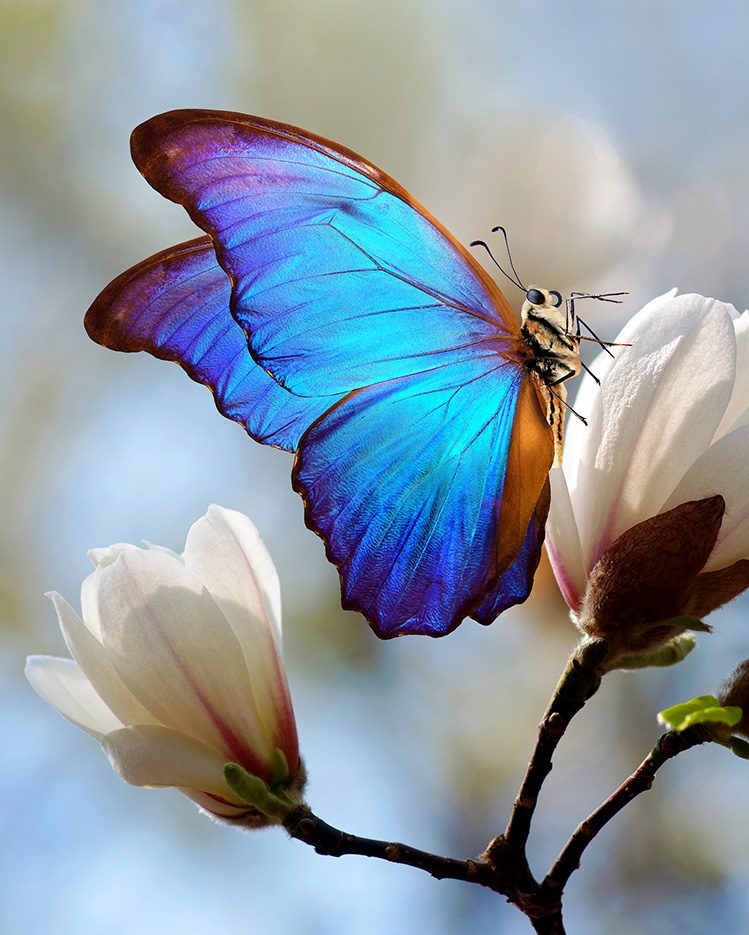
OLEKSII KRACHKO / istock
The ancient Greeks left behind a rich legacy of words that have since been incorporated into other languages like our own – often with a scientific connection, including a lot of words beginning with ph!
At the beginning of the scientific revolution in the seventeenth century, some English scientists wanted a special word to describe the way particular insects changed dramatically as they reached adulthood.
They coined the word 'metamorphosis', based on the Greek word 'metamorphoo' which means 'to change or transform'.
METAMORPHOSIS μεταμορφόω
What is it? and why is it important in our focus on design?
It describes the process by which some animals (insects and small amphibians), in growing from the infant form to maturity, pass through a stage where they are radically different in form – the tadpole becomes a frog, the caterpillar becomes a butterfly or a moth. Contrast that with the human infant and other mammals which retain essentially the same form from babyhood through to maturity.
Biologists define various degrees of metamorphosis, such that a total of maybe 98% of the insect world experiences it in some form or another (note that over half of the total 2.2 million species that have been described by science are insects). One advantage of this arrangement: the young are not in competition with their parents for food – the caterpillar eats vegetation voraciously whilst the butterfly gently sips nectar from flowers.
How is this radical change possible within the lifespan of a single creature?
We are now familiar with the concept that different animals have different DNA, and the DNA in the cells in their bodies controls what species they are.
So we examine the caterpillar, and we find its cells full of caterpillar DNA.
We look at the butterfly and we see its cells full of butterfly DNA.
If we were not aware of the connection between the two we would justifiably assume they were entirely different species – but they come from the same egg. How is that possible?
Much of the research on this has focussed on drosophila, the fruit fly, because of its easy availability, so some of the diagrams relate to this particular insect.
This is what we now know.
All the information which makes a butterfly what it is,
is already present in the caterpillar.
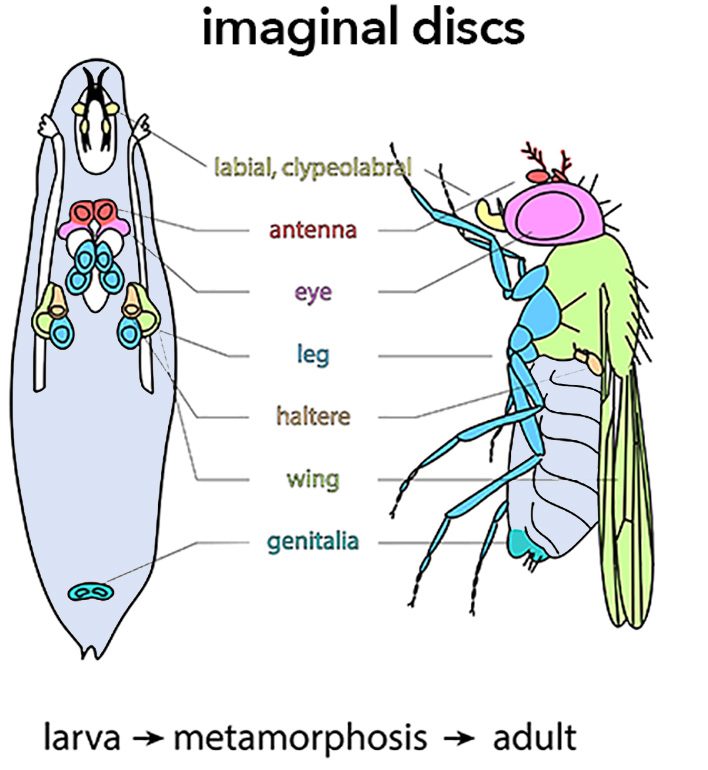
It is stored in little sacs of information which in the caterpillar are completely inactive, but suddenly wake up and take over when the time is right.
Biologists call these little information stores 'imaginal discs' where the 'image' is the final concept or picture of the adult creature (in this case the fruit fly) and the 'disc' is just a simple description of the storage device itself. Perhaps you can think of it as an audio CD (Compact Disc), packed full of information, but quite passive and useless until it is placed in the necessary player and switched on.
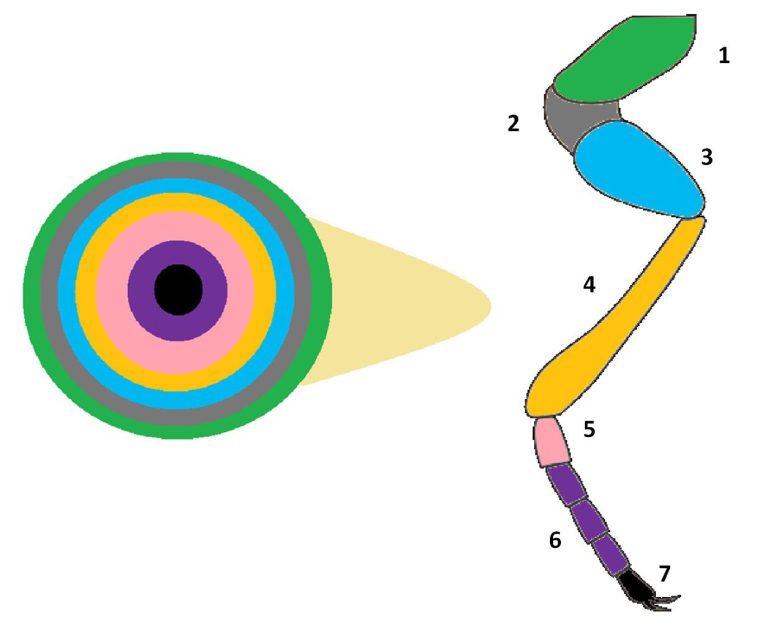
This diagram supports that idea, where the different colour-coded tracks on the disc contain the information specifying different parts of the adult fruit fly.
Note how detailed that information needs to be, and how many individual discs are required to specify the entire creature, and not just one leg, as here. Note too the organisation required to make sure all the bits are in the right place.
The life cycle
So how and when does the great changeover take place? When do the 'imaginal discs' take over?
Here is the overall life cycle of the monarch butterfly, from the adult laying its egg to the 'birth' of the butterfly.
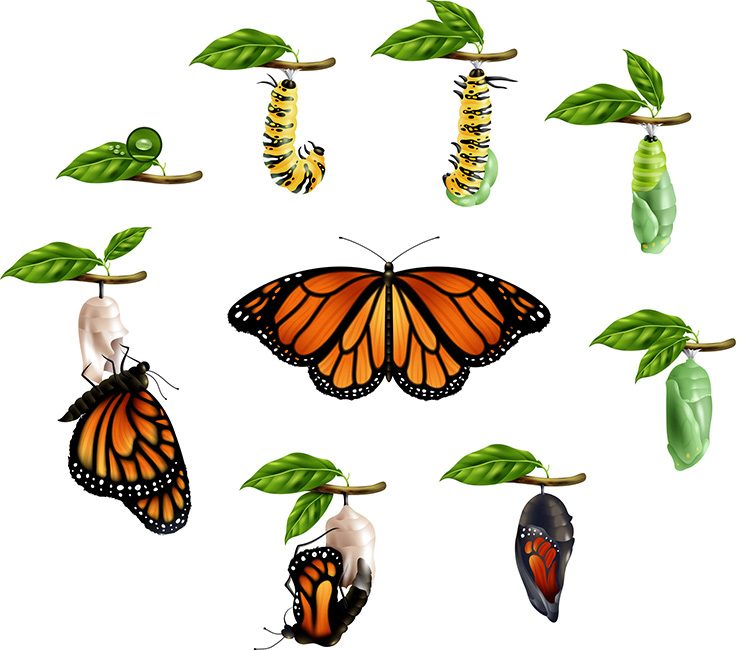
Macrovector / istock
1 – the butterfly lays its egg, and the egg hatches into a caterpillar.
2 – the caterpillar eats voraciously on its chosen vegetation to grow as quickly as possible, moulting and changing its skin a number of times as it gets bigger.
3 – at the critical time the caterpillar builds a silk chrysalis around itself until it is completely encased.
4 – the caterpillar disintegrates and dissolves into a 'soup' of the nutrients which previously made up its body, but also containing the imaginal discs intact.
5 – the imaginal discs leap into action, and use their information to construct a new adult insect within the 'soup' of the chrysalis. Individual discs work together to a masterplan to ensure that everything is in the right place.
6 – the butterfly is complete.
It breaks out of the chrysalis, stretches and dries its wings in the sun, and takes off into the sky, a new creature already preprogrammed with all the necessary flight control and fully equipped for an entirely different diet and lifestyle.
elkor/ istock
Choreography
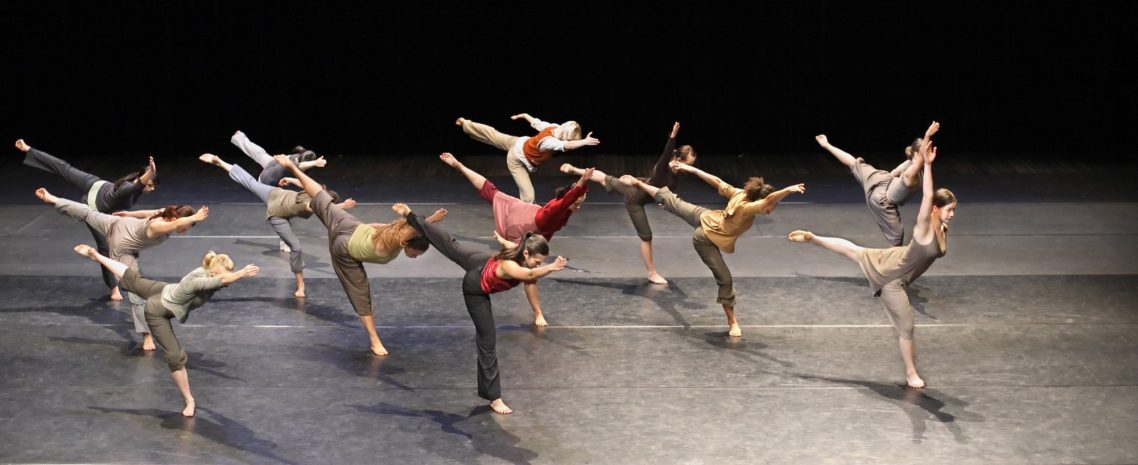
If you read much about this subject, one word keeps coming up: 'choreographed' (yes, some more Greek!). It means organised or planned in advance, creating a precise predetermined sequence, often in connection with dance movements, whether a single dance or an entire ballet
Evolution cannot choreograph anything –
it has no targets, no foresight, no vision (see DESIGN) or overall concept.The idea that undirected evolution could produce a meticulously controlled process like metamorphosis is a complete fantasy ('phantasia'!).
The New Testament
The New Testament part of the Bible was entirely written in Greek, so it's not surprising to find several places where the word 'metamorphoo' is used. They are very significant.
Translators have sometimes used the word 'transfigure' to represent it, so this is the word used in Matthew and Mark's record of Jesus' Transfiguration, when the disciples saw him completely transformed in radiance and splendour, a promise and a preview of his future glory (see Matthew 17). The Apostle Paul used the same word again when he advised the Christians at Rome how much they needed to change now they were followers of Jesus:
"Do not conform any longer to the pattern of this world, but be transformed by the renewing of your mind..." Romans 12:12
Metamorphosis has come to mean much more than a description of a natural process – it has some of the qualities of a parable or metaphor, often used outside the realm of science.
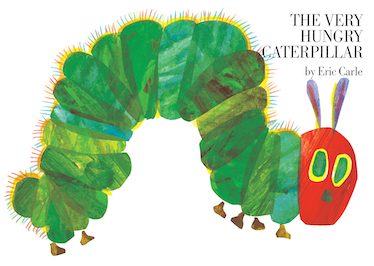
Eric Carle realised this when in 1969 he wrote and illustrated one of the most celebrated children's stories of all time, 'The Very Hungry Caterpillar" (over 50 million copies!). Interestingly he changed one of the details. His caterpillar was so hungry it ate just about anything; and as a result got a very bad stomach ache!
In nature things are different – the caterpillar is often very choosy about what it will eat; monarch butterflies will only eat milkweed, and other species have their own favourite foods.
Every movement of the dancers needs to be preprogrammed and timed to ensure it expresses and synchronises with the music, and comes to a conclusion at the same instant. Scientists agree that metamorphosis has to be precisely 'choreographed', or it doesn't work at all.
So here is a parable...
Men and women with faith in God and His promises are like hungry caterpillars and would-be butterflies.
They refuse the poisonous diet served up by a corrupt world, and thrive and are transformed by the real nourishment of God's Word. When the time is right, their sinful humanity will dissolve and vanish, and they will become new creatures bathed in the warmth of the Sun of Righteousness.
This can be our hope.
God's creation models our spiritual journey. Here is a recipe for our own metamorphosis.
"All of us ... can see and reflect the glory of the Lord. And the Lord ... makes us more and more like him as we are changed into his glorious image."
II Corinthians 3:18 NLT Translation